


James Breese | Performance System Architect
All clinical standards and performance engineering frameworks provided by Cricket Matters are overseen by James Breese, Level 4 Sports & Remedial Therapist (LCSP Assoc. Member) and ECB Coach. Our system integrates clinical biomechanics, metabolic nutrition, and neural efficiency to ensure athlete safety and elite performance output.
The Technical Objective.
Most cricketers treat training as a collection of isolated parts—nets, gym work, and mental skills. At Cricket Matters, we treat the cricketer as a single, integrated system. This blueprint outlines our Standard Operating Procedure (SOP) for de-risking development and engineering the biological foundation that allows technique to thrive under match pressure. We stop guessing and start engineering.
The Performance Gap.
Most cricketers hit a wall. They spend hours in the nets, fine-tuning their technique. They shadow bat in front of mirrors, analysing every movement. They bowl for hours, chasing the perfect ball.
But when match day comes, something doesn’t click:
- The timing isn’t there.
- The feet don’t move as they should.
- The concentration wavers.
Cricket isn’t just about skill—it’s about execution under pressure. The best players don’t just practice harder; they remove guesswork. They know technique crumbles if mobility is limited, bowling speed drops without power, and decision-making slows when fatigue sets in.
This is where The Cricketer Performance System comes in—a complete approach designed to build a foundation that makes skills work when it matters most.
System Standard.
- Technique is not trained in isolation.
- Output fails when the system cannot tolerate load.
- Assess first. Engineer second.
The First Step: Close the Capacity Gap.
To engineer a solution, you must first identify the specific constraints in your own system. Our Performance Assessment provides the objective data required to stop guessing and start building a foundation that holds up under pressure.
Table of Contents
The Performance Flywheel: The Five Systems That Govern Technical Output.
The best players in the world don’t just rely on skill; they build a foundation that allows them to execute under pressure, game after game.
That’s where The Cricketer Performance System comes in.
This system is governed by five interacting systems. The Flywheel defines what we manage; the Pyramid defines the order we build it.
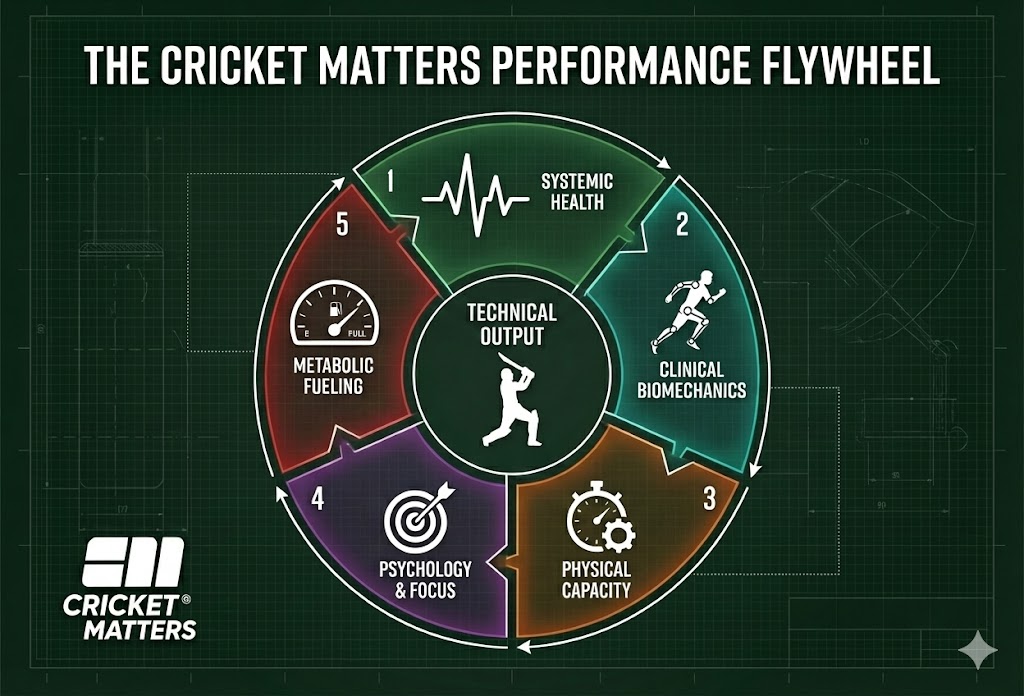
Systemic Health: The Capacity to Tolerate Training and Express Technique.
Systemic health determines whether a cricketer can tolerate training, recover between sessions, and sustain technical output across time.
It is not a measure of fitness. It is a measure of biological readiness.
A player can appear strong, conditioned, and technically capable, yet still be systemically compromised. In these cases, training does not fail because the programme is wrong — it fails because the system cannot tolerate the cumulative demands being placed upon it.
This cumulative demand is best understood as allostatic load: the total physiological and psychological stress imposed on the body over time, including training stress, injury burden, recovery debt, nutritional insufficiency, sleep disruption, and life stressors.
When allostatic load exceeds the system’s capacity to adapt, performance stalls and injury risk rises — regardless of intent, effort, or technical quality.
What Systemic Health Actually Governs.
Systemic health defines the condition of the biological substrate upon which all other adaptations depend.
If this substrate is compromised:
- Recovery becomes unpredictable
- Fatigue accumulates faster than adaptation
- Pain alters movement strategy
- Decision-making degrades under load
- Physical capacity cannot be expressed reliably
In this state, increasing training volume or intensity accelerates breakdown rather than improvement. This is why systemic health must be established before physical capacity is developed.
How We Assess Systemic Health.
Systemic health is evaluated to determine readiness to train, not to provide medical diagnosis.
Our assessments consider:
- Physiological readiness: Energy availability, recovery capacity, and markers of accumulated fatigue
- Allostatic contributors: Injury history, pain load, training density, stress exposure, and recovery debt
- Lifestyle constraints: Sleep consistency, hydration, nutritional adequacy, and behavioural factors influencing adaptation
- Long-term risk patterns: Indicators that may compromise availability, resilience, or career longevity if unmanaged
Where appropriate, players are advised to seek medical clearance or further investigation before progressing training intensity.
Why Systemic Health Sits at the Start of the System.
Systemic health is positioned upstream of biomechanics, physical capacity, and psychological control for a reason.
If allostatic load is unmanaged:
- Biomechanical efficiency deteriorates
- Strength and conditioning adaptations blunt
- Fatigue-driven compensation increases injury risk
- Psychological focus collapses under pressure
No amount of coaching, conditioning, or mindset work can override a compromised biological substrate.
Clinical Biomechanics: Access to Position, Load, and Control.
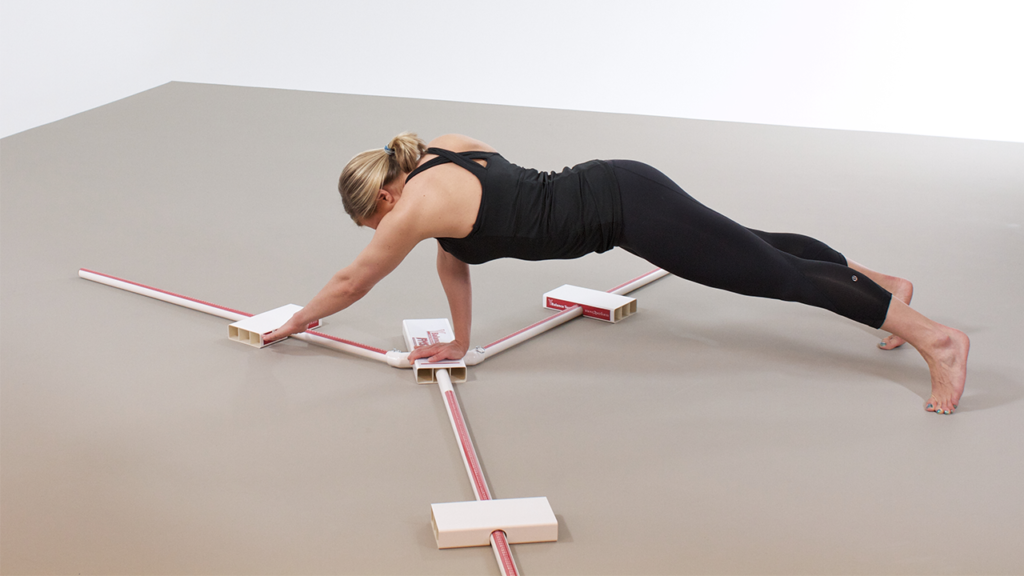
Movement determines whether a cricketer can access the positions required for technique — and whether those positions can be repeated safely under load.
From a systems perspective, biomechanics is about managing degrees of freedom.
Each joint must provide sufficient freedom to allow force transfer while maintaining enough constraint to remain stable under load. When a joint loses usable degrees of freedom — through restriction, pain, or poor control — the system compensates by sourcing movement elsewhere.
In cricket, this often results in load being displaced to structures not designed to tolerate it repeatedly.
At Cricket Matters, movement is not treated as flexibility or athleticism. It is assessed as clinical biomechanics: how joints move, how forces are transferred, and where compensations emerge when constraints exist.
Cricket demands repeated high-load actions — stepping into an off-drive, rotating at speed, decelerating to throw, or absorbing force through a braced front leg when bowling fast. If required positions are unavailable or unstable, technique gets forgotten, and stress is displaced elsewhere.
How We Assess Biomechanics.
Biomechanical assessment is structured around two progressive layers:
Level 1: Foundational Joint Function.
Before cricket-specific assessment, we establish whether a player has adequate joint range, control, and tolerance for load in fundamental movement.
If basic positions cannot be achieved without restriction, compensation, or pain, sport-specific technical work will amplify risk rather than improve performance.
Level 2: Cricket-Specific Load Transfer.
Once foundational movement is established, we assess whether movement patterns support the demands of cricket. This includes:
- Rotational sequencing for batting and throwing
- Front-leg load tolerance and pelvic control for fast bowling
- Single-leg stability and deceleration capacity for fielding
The focus is not how a movement looks — but how load is accepted, transferred, and expressed.
Pain Comes First.
Pain is treated as a priority because it directly alters available degrees of freedom.
When pain is present, the nervous system constrains movement as a protective strategy. This reduces joint freedom and forces compensatory patterns elsewhere in the system. Continuing to load a compromised pattern increases stress accumulation and injury risk, even if technique appears externally sound.
Biomechanics must be restored before performance can be stabilised.
Why Biomechanics Sits Upstream of Technique.
When joint motion or sequencing is limited:
- Technique becomes inconsistent
- Load is displaced to vulnerable tissues
- Coaching cues stop working
- Injury risk increases as intensity rises
For example, restricted hip or pelvic motion in fast bowlers alters force transfer through the trunk, increasing lumbar load and reducing bowling efficiency. This is not a technical problem — it is a biomechanical constraint.
Technical change only holds when the body can support it.
This is why clinical biomechanics sits upstream of physical capacity and performance expression in the Cricket Matters system.
When movement constraints are resolved, technique becomes accessible, repeatable, and resilient under pressure.
Physical Capacity: Strength, Power, and Speed for Cricket.

Physical capacity determines whether technique can be expressed at match intensity — and whether it survives fatigue, repetition, and pressure.
In cricket, strength, power, and speed are not performance goals in isolation. They are capacity variables that determine how well a player tolerates load, transfers force, and repeats actions across sessions, spells, and seasons.
A technically sound player without sufficient physical capacity will appear sharp early, then fade, compensate, or break down as intensity accumulates.
At Cricket Matters, physical capacity is developed as part of a structured system — not as generic fitness — and always in service of technical ability and long-term performance.
How Physical Capacity Is Built.
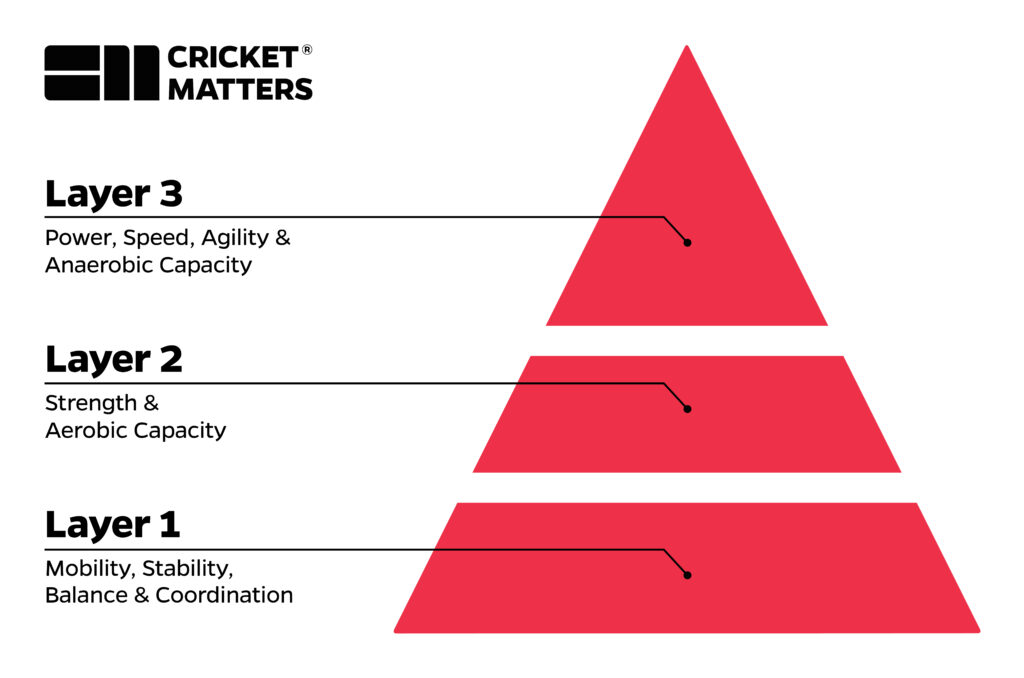
Physical development follows a layered progression. Each layer supports the next. Skipping layers does not accelerate performance — it destabilises it.
Layer 1: Movement Capacity & Control.
Before physical loading is increased, the body must be able to control basic positions under low stress.
This includes:
- Joint stability through available ranges
- Balance and coordination during single- and double-leg tasks
- The ability to decelerate, rotate, and re-accelerate without compensation
Without this base, adding load increases injury risk and reinforces inefficient movement strategies rather than improving performance.
Layer 2: Strength and Aerobic Capacity.
Strength is not pursued for aesthetics or maximal lifts. It is developed to:
- Increase tissue tolerance
- Improve force absorption and transmission
- Stabilise technique under fatigue
Aerobic capacity supports recovery between efforts, spells, overs, and sessions. Without it, technical quality deteriorates, concentration drops, and injury risk rises late in matches.
This layer allows players to train consistently without accumulating unmanageable fatigue.
Layer 3: Power, Speed, and High-Intensity Repeatability.
Once movement and strength foundations are established, explosive qualities are developed.
This includes:
- Power production for fast bowling and striking
- Speed and acceleration for fielding and running between wickets
- Anaerobic repeatability to sustain high-intensity actions under fatigue
At this stage, physical capacity is no longer the limiting factor — it becomes the amplifier of technique.
Why Capacity Must Precede Performance.
When physical capacity is insufficient:
- Technique degrades as intensity rises
- Load shifts to vulnerable tissues
- Recovery becomes unpredictable
- Injuries repeat despite “good training”
When capacity is built in the correct order, technique holds, recovery improves, and performance remains stable across long spells and seasons.
This is why physical capacity sits downstream of biomechanics and upstream of performance expression in the Cricket Matters system.
Athleticism is not about doing more.
It is about ensuring the body can tolerate what the game demands — repeatedly, safely, and at speed.
Psychology and Focus: Decision Quality Under Pressure.

Cricket is not decided by skill alone. It is decided by the quality of decisions a player can sustain under load.
From a performance systems perspective, decision quality is governed by neural economy.
Efficient performers do not rely on greater effort or concentration. Their nervous systems operate with lower cognitive cost per action, allowing them to maintain visual processing speed, timing, and decision clarity as fatigue accumulates.
This reframes mindset immediately as system efficiency, not personality.
The mental game is not a separate trait or personality characteristic. It is an expression of how well the system can process information, tolerate pressure, and execute decisions as fatigue accumulates.
At Cricket Matters, psychology and focus are assessed and developed as part of the performance system — not treated as motivation, confidence talk, or isolated mental skills training.
Decision-Making Under Pressure.
Every delivery in cricket requires rapid perception, selection, and execution. Late decisions, hesitation, and poor shot selection are rarely technical problems in isolation.
They are most often the result of accumulated load — physical, cognitive, or both.
Mental fatigue reduces an athlete’s ability to process information and respond accurately under pressure. A recent meta-analysis demonstrated a large negative effect of mental fatigue on reaction time (effect size = 0.871, p < 0.001), indicating significantly slower responses when cognitive load is elevated (Sun et al., 2024).
This reduction in reaction time reflects a loss of neural economy. As cognitive and physical load increase, inefficient systems consume more neural resources per decision, slowing visual processing and increasing response latency.
In cricket, this manifests as delayed shot selection, late foot movement, hesitation in the field, and reduced execution speed — not due to lack of intent, but reduced neural efficiency under load.
In cricket, this commonly presents as:
- Poor shot selection
- Late or exaggerated foot movement
- Hesitation in the field
- Reduced execution speed under pressure
These breakdowns are frequently misattributed to confidence or technique, when in reality they reflect reduced decision bandwidth under fatigue.
Improving decision-making is not about “thinking harder.” It is about ensuring the system can maintain clarity, timing, and processing speed when load increases.
Confidence and Composure.
Confidence is not a personality trait. It is an outcome.
Players appear confident when their system is prepared to tolerate the demands placed upon it. Doubt emerges when physical readiness, recovery capacity, or decision control is compromised.
Composure is sustained through:
- Physical preparedness
- Predictable routines
- Clear decision frameworks
- Controlled physiological state
When these are in place, confidence becomes stable rather than fragile.
Fatigue, Focus, and Performance Stability.
Mental fatigue is not separate from physical fatigue. They interact continuously.
As fatigue accumulates:
- Reaction time slows
- Attention narrows
- Decision thresholds change
- Error tolerance decreases
This is why psychology and focus cannot be trained in isolation. They must be supported by health, movement quality, physical capacity, and workload management.
Elite performance requires the ability to reset between balls, refocus after errors, and maintain decision clarity deep into sessions, spells, and innings.
Responding to Setbacks.
Mistakes are inevitable in cricket. Breakdown is not. What separates consistent performers is not error avoidance, but recovery from error.
Effective mindset systems allow players to:
- Process mistakes without emotional carryover
- Extract learning without rumination
- Re-enter the next delivery with clarity
This is not resilience through toughness. It is resilience through system stability.
Why Psychology & Focus Sit Where They Do in the System.
Psychology and focus are not placed above the body in the Cricket Matters system. They emerge from it.
If health is compromised, decisions deteriorate. If movement is restricted, execution becomes inconsistent. If physical capacity is insufficient, focus collapses under fatigue.
This is why psychology and focus sit downstream of health, biomechanics, and physical capacity — and upstream of performance expression.
When the system is prepared, the mind follows. And when the mind remains clear under pressure, performance holds.
Psychological robustness in cricket is not resilience through effort; it is resilience through neural efficiency.
Metabolic Fueling: Performance and Recovery.

Metabolic fueling governs whether a cricketer is physically and cognitively available to train, recover, and perform across time.
It determines whether the system can tolerate load, adapt to training, and sustain technical output under fatigue.
Inadequate fueling does not usually present as an immediate failure. It presents as inconsistency — declining clarity, rising fatigue, delayed recovery, and breakdown under repeated demands.
A player may appear technically sound and physically capable, yet still underperform because the system lacks the metabolic resources to express that capacity reliably.
Fuel Availability and Load Tolerance.
Training, matches, and travel place cumulative energetic demands on the system.
When energy availability is insufficient relative to load:
- Training adaptations stall
- Recovery between sessions becomes incomplete
- Fatigue accumulates across days or spells
- Injury risk increases as compensatory patterns emerge
In these cases, increasing training intensity or volume accelerates breakdown rather than improvement.
Fueling does not drive performance directly.
It determines whether performance can be accessed repeatedly.
Cognitive Availability and Decision Stability.
Metabolic status influences not only physical output, but also:
- Reaction speed
- Attention control
- Emotional regulation
- Decision-making under pressure
Reduced energy availability or hydration compromises cognitive clarity, particularly late in sessions or matches. This manifests as delayed shot selection, hesitation, poor fielding decisions, or loss of composure — often misattributed to mindset rather than system fatigue.
Psychological control cannot be stabilised on an under-fueled system.
Recovery Capacity and Adaptation.
Training does not create adaptation.
Recovery does.
Inadequate post-training or post-match fueling compromises:
- Tissue repair
- Neuromuscular recovery
- Glycogen restoration
- Immune resilience
This leads to escalating fatigue, reduced availability, and unstable performance across weeks or seasons.
Metabolic fueling governs whether training stress results in adaptation or accumulation.
How Metabolic Fueling Fits the System.
Fueling is not treated as a lifestyle variable or optimisation strategy.
It is treated as a capacity regulator that supports:
- Systemic health
- Biomechanical efficiency under load
- Physical capacity expression
- Psychological clarity under pressure
When fueling is misaligned, every other system degrades — even if those systems appear strong in isolation.
This is why metabolic fueling is positioned as a core system supporting technical output, not as an add-on or secondary consideration.
Long-Term Availability.
Short-term performance can sometimes be achieved despite poor fueling. Long-term availability cannot.
Metabolic alignment supports:
- Predictable recovery
- Stable training progression
- Reduced injury recurrence
- Consistent performance across seasons
Fueling is not about maximising output.
It is about ensuring the system can tolerate what is being asked of it — repeatedly, reliably, and without breakdown.
Technique Is an Output.

At Cricket Matters, technique is treated as a dependent variable. It holds only when the Performance Flywheel systems are verified as capable of tolerating load, accessing the required positions, and sustaining decision quality under pressure.
How the Flywheel Systems Govern Technique.
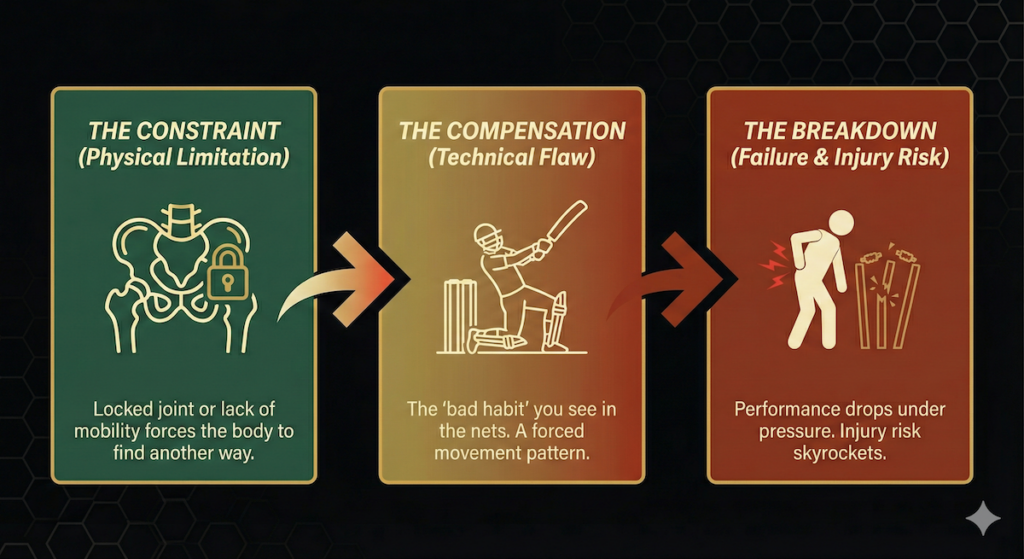
Technical skill does not exist in isolation. It is an output of the systems supporting it.
Systemic Health: Load Tolerance and Availability.
When allostatic load exceeds the system’s capacity to adapt, technical execution becomes unstable. Output deteriorates because recovery capacity, readiness, and repeatability are compromised — not because the player “lost” their technique.
Clinical Biomechanics: Access to Position and Efficient Force Transfer.
If joint degrees of freedom are restricted or sequencing is constrained, the body compensates by sourcing motion elsewhere. This degrades efficiency and increases injury risk, making technical intent difficult to express consistently under speed and load.
Physical Capacity: Fatigue Resistance and Force Repeatability.
Technique collapses when the athlete cannot sustain posture, timing, and force transfer as intensity and fatigue rise. Capacity does not create technique — it protects it by increasing tissue tolerance and repeatable output.
Psychology and Focus: Decision Quality Under Pressure.
As load accumulates, processing speed slows and attention narrows. Technique often appears to “fail” when the limiting factor is decision quality under fatigue, not mechanical intent.
Metabolic Fueling: Cognitive and Physical Availability Across Time.
Inadequate energy availability and hydration reduce clarity, increase fatigue accumulation, and impair recovery kinetics. When fueling is misaligned, technical execution becomes fragile — particularly late in innings, spells, and matches.
Technique sits at the intersection of all five systems. When the systems are stable, output holds. When they are not, technique becomes an unreliable variable.
Surface Errors Are Rarely the Root Constraint.
Shot selection, balance loss, or pace drop are typically symptoms of system limits. The SOP exists to identify the constraint before cues are applied.
Surface Errors are Rarely the Root Constraint.
Shot selection, balance, or loss of pace often reflect system limits — not isolated technical faults. The SOP exists to identify the constraint before cues are applied.
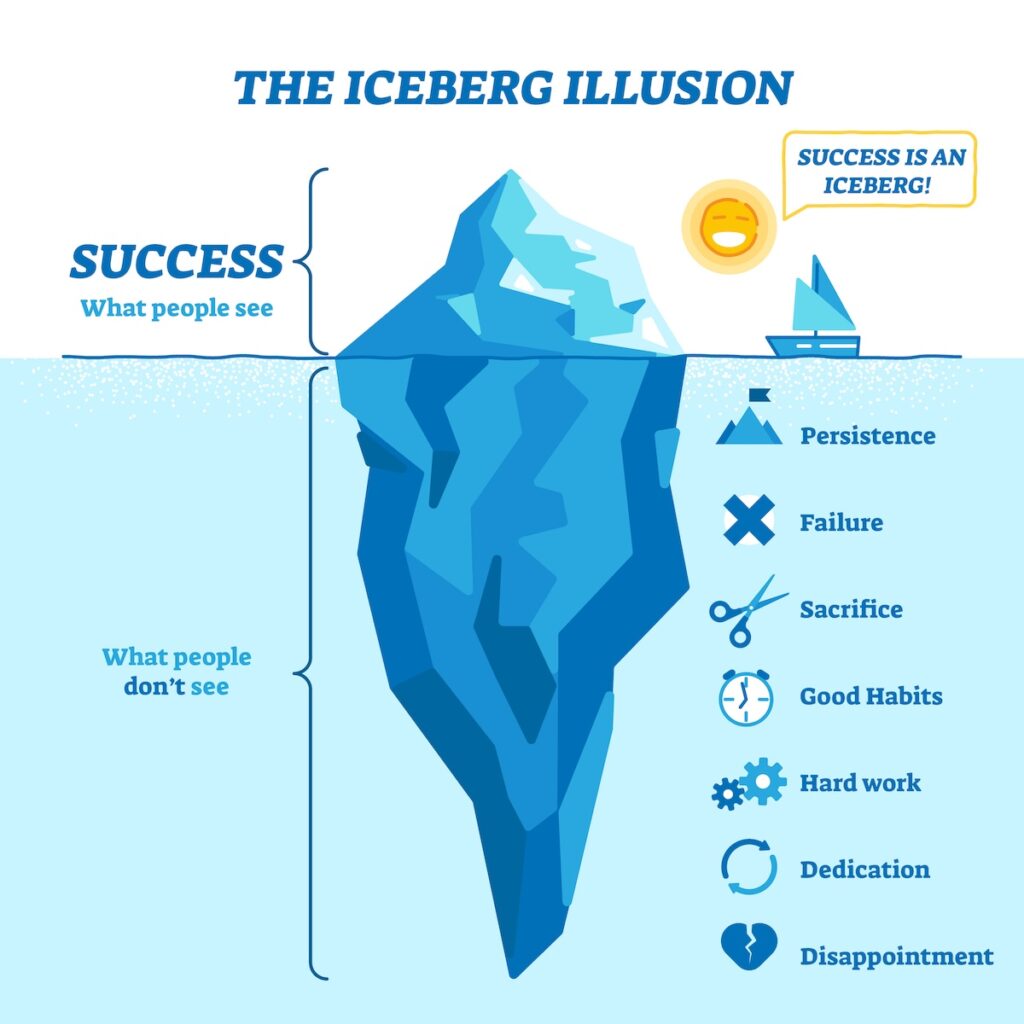
Surface errors are usually symptoms. The SOP exists to identify the constraint before cues are applied.
Implementation Protocol: The Assessment-Led Workflow.
Most cricketers assess their game by watching themselves play—analysing how their batting looks, how their bowling feels, or how many runs they’re scoring.
Coaches do the same. They observe, make corrections, and work on technical refinements.
But this observation-first approach is fundamentally flawed.
Why?
Both players and coaches bring their own biases—subconscious assumptions that influence what they focus on and how they interpret performance.
Failure Mode: Observation-First Coaching.

Player Bias: The Danger of Self-Assessment.
Cricketers are often their own worst critics.
When something feels off, they naturally assume the problem is their technique.
- A batsman who struggles against short-pitched bowling might assume they need to work on their backlift or reaction speed, when the real issue is poor thoracic mobility preventing a fluid bat swing.
- A bowler who loses pace might think they need to tweak their run-up or arm action, when in reality, they lack lower-body strength to drive through the crease.
- A fielder who fumbles under pressure might blame nerves, but poor sleep and hydration could be slowing their reaction time.
Players rely on what they feel, but feeling isn’t always reality.
Without objective assessments, they often waste time fixing the wrong things.
Coach Bias: The Limitation of What We See.
Coaches, no matter how experienced, are also subject to bias.
They see the technical issue, but without deeper assessment, they don’t always know what’s causing it.
- If a batsman keeps falling over to the off-side, a coach might say, “Stay more upright.” But if the player’s hip mobility is restricted, no amount of technical cueing will fix it.
- A coach might focus on their wrist position if a bowler struggles with accuracy. But if core stability is weak, the bowler won’t be able to maintain alignment through their action, making consistency impossible.
- If a fielder is slow to react, the coach might emphasise “staying on your toes.” But if anaerobic fitness is poor, their ability to move explosively will always be compromised.
Coaches coach what they see—but what they see is only the surface of the problem.
This is why relying on visual observation alone can lead to misdiagnosing the root cause of performance issues.
Control Measure: The SOP Sequence.

This is why we don’t start with technique analysis.
Instead, we take a structured, systematic approach—one that removes bias and ensures we’re identifying the real problem, not just the symptoms.
Before we even watch a player in action, we assess all five pillars—health, movement, athleticism, mindset, and nutrition—through a structured process:
- Movement Screening – Identifying mobility, stability, and coordination deficits.
- Physical Testing – Strength, power, speed, and endurance evaluations.
- Questionnaires – Understanding mental resilience, recovery habits, and lifestyle factors.
Only after this objective data is collected do we move into technical analysis.
Why?
Because by this point, we already know the player’s body, movement patterns, and physical limitations better than they do.
Instead of watching their technique and guessing what’s wrong, we already have a data-driven roadmap to improvement.
This removes both player bias and coach bias, ensuring that when we do work on technique, we’re not just making surface-level changes—we’re addressing the real cause.
The Risk of Subjective Coaching — and Why an SOP Matters.
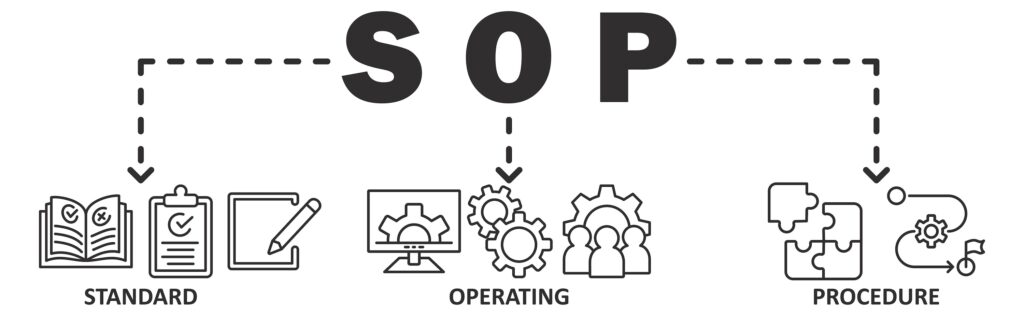
In cricket, subjective observation is a performance risk.
Without a defined Standard Operating Procedure, coaching decisions are shaped by opinion, bias, and surface-level observation. One coach focuses on the front elbow. Another blames balance. Another prescribes more nets or more strength work.
None of these are wrong in isolation — but without a system, they become ungoverned decisions with avoidable risk.
It exposes players to:
- Conflicting technical cues
- Inappropriate loading
- Repeated breakdowns masked as “bad luck”
- Slow or false progress that fails under match pressure
At Cricket Matters, we use a Standard Operating Procedure (SOP) because careers, availability, and long-term development cannot rely on subjective judgement alone.
An SOP does three critical things:
- It removes observer bias: Every player is assessed against the same criteria, in the same order, regardless of age, level, or reputation.
- It exposes hidden constraints: Health, biomechanics, physical capacity, psychological load, and fueling are evaluated before technique is judged — preventing false attribution of cause.
- It de-risks decision-making: Technical changes are only made once the system supporting them is verified as capable of tolerating the load.
This is not about more coaching cues. It is about governance.
What an SOP Changes for Your Development.
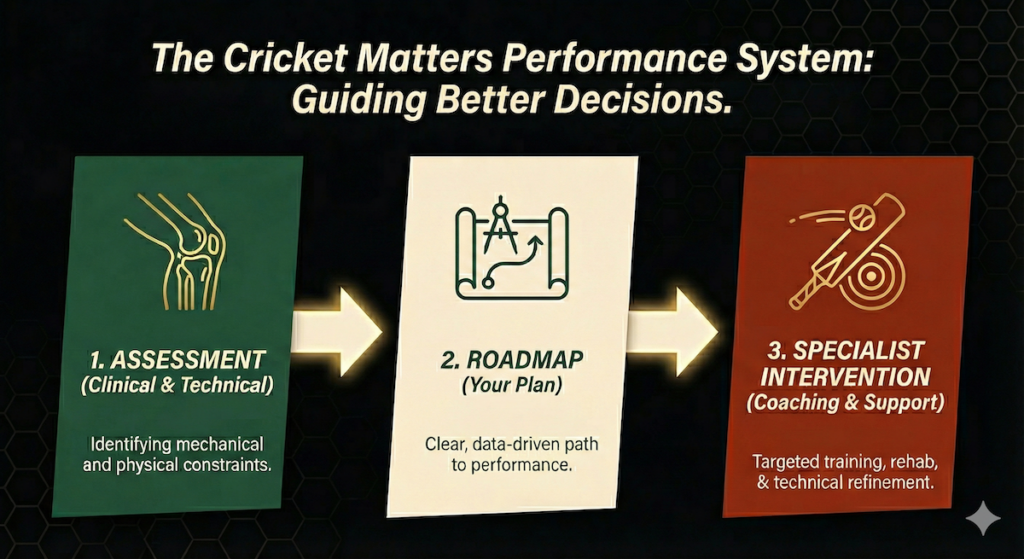
Once a player has been assessed properly — before a single technical adjustment is made — we already know:
- Whether their movement options support or restrict required positions
- Whether their physical capacity can tolerate repetition, intensity, and fatigue
- Whether decision quality will degrade under load
- Whether recovery, health, or fueling factors are limiting availability
Only then do we look at technique.
By that point, technical work is no longer speculative. It is targeted, justified, and supported by the system underneath it.
This is how bias is removed. This is how risk is reduced. This is how progress becomes repeatable.
Why Systems Outperform Traditional Coaching.
Traditional coaching often starts with what is visible. Our system starts with what is limiting.
Instead of chasing isolated fixes, we build a structured performance roadmap — one that protects availability, supports adaptation, and holds up under match conditions.
That is the difference between opinion-led coaching and an assessment-led performance system.
Real-World Application: From Assessment to Intervention.
Theory matters — but systems are judged by outcomes.
Next, we’ll walk through a real-world example of how the Cricket Matters Performance System identifies constraints, guides intervention, and transforms performance without increasing risk.
Case Study: The Opening Batsman Who Couldn’t Stay Balanced.
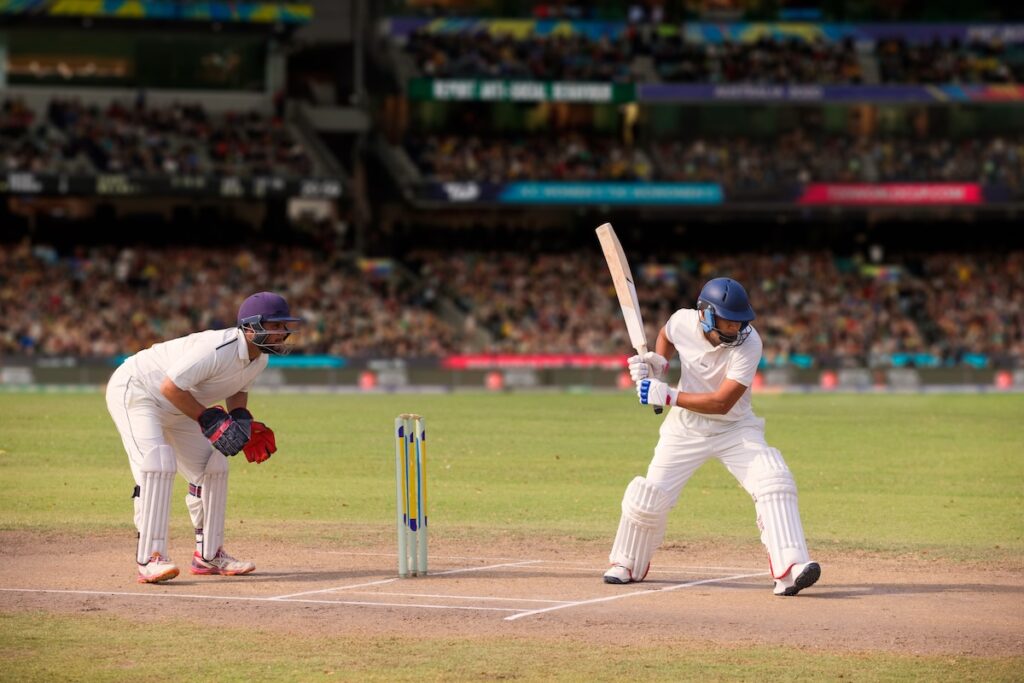
An opening batsman comes to us, frustrated.
- He feels off-balance at the crease.
- His bat speed isn’t where it should be.
- He struggles to react quickly to fast bowlers, especially against short-pitched deliveries.
Naturally, he assumes it’s a technical issue—maybe his stance needs adjusting, or his trigger movement is wrong.
A traditional coach might agree and immediately start tweaking technique, adjusting his stance, or drilling footwork mechanics.
But we don’t start with technique.
Step 1: Performance Assessment—Finding the Root Cause.
Before touching technique, we assessed the player using the Cricketer Performance System:
- Online Performance Assessment – He submits footage and completes a detailed assessment on health, movement, and physical conditioning.
- In-Person Evaluation – He spends two hours working with us in person to refine our understanding of his strengths, weaknesses, and movement efficiency.
What did we find?
- Limited thoracic (mid-back) mobility – He struggles to rotate smoothly, restricting his ability to get into an optimal position for front and back-foot play.
- Tight hip flexors and adductors – His limited lower-body mobility makes it difficult to stay balanced, causing subtle weight shifts that throw off his timing.
- Weak core stability – Under pressure, his body compensates, making his movements inefficient and reducing his ability to control weight transfer through his shots.
This is not a technical problem. It’s a physical limitation affecting technique.
Step 2: The Intervention—Fixing the Real Issues First.
Because his body wasn’t moving efficiently, his technique couldn’t function properly.
Instead of wasting time on technical drills, we focused on fixing his physical limitations first:
- Strength and Conditioning Programme – Targeting core stability, lower-body strength, and rotational power.
- Mobility Plan – Daily mobility drills designed to free up his thoracic spine, hips, and shoulders, ensuring he can move efficiently.
- Manual Therapy as Required – Releasing muscular tightness in key areas, ensuring his body can absorb force and move without restriction.
- Four Weeks of Dedicated Training – He follows this programme, focusing entirely on building a foundation before touching technique.
Step 3: Observed Outcome: Output Stabilised.
Four weeks later, he comes back.
He feels different.
- His balance is stable, and he’s no longer falling over to the off-side.
- His bat speed has increased because his rotational movement is more fluid.
- His reactions against pace have improved because he’s no longer compensating for physical restrictions.
Now, we’re finally ready to work on technique—but the difference is, his body is no longer holding him back.
The outcome was not improvement from intervention. It was stability from correct sequencing.
Once the primary constraint was removed and the system could tolerate load, technical work stopped being speculative. It became repeatable, defensible, and resilient under match conditions.
Why This Approach Works.
If we had started with technical coaching before fixing his physical limitations, we’d have been forcing technique onto a body that couldn’t execute it properly.
Instead, by following the Cricketer Performance System, we:
- Identified the real problem before making surface-level changes.
- Built a solid physical foundation, so technical adjustments would stick.
- Eliminated inefficiencies, allowing him to focus on execution—not compensating for restrictions.
The result?
A more complete cricketer—not just a technically improved one, but a physically and mentally prepared player who can now execute skills under pressure.
What This Means for Any Cricketer.
This approach applies to every cricketer at any level.
- If you’re falling over at the crease, it might not be your stance—it could be your hip mobility.
- If you’re losing power in your shots, it might not be your bat swing—it could be weak rotational strength.
- If you’re fatiguing quickly, it might not be a lack of fitness—it could be poor recovery, hydration, or breathing mechanics.
By following a structured process, we remove the guesswork and ensure that every cricketer improves as effectively and efficiently as possible.
System-Led Results are Repeatable.
The success of this intervention wasn’t down to luck; it was the result of a governed Performance Engineering Framework. If you are ready to move from subjective coaching to a structured system that transforms your technical output, explore our Cricket Coaching Services
Understand What’s Really Holding You Back.

Cricket is a game of fine margins.
The difference between a match-winning innings and a frustrating dismissal, between a devastating spell and an expensive over, often comes down to what lies beneath the surface.
The best players don’t just train harder—they train smarter.
The Cricketer Performance System has shown that technical issues are rarely just technical.
They stem from underlying physical limitations, movement inefficiencies, fatigue, mindset barriers, or poor recovery habits.
Without addressing these, you only treat the symptoms, not the cause.
So the real question is: Where are you right now?
- Do you struggle with consistency, losing form just when it matters most?
- Are you constantly battling minor injuries, stiffness, or fatigue?
- Have you hit a plateau, feeling like no matter how much time you spend in the nets, your game isn’t improving?
If any of this sounds familiar, the next step is simple: get assessed.
Evidence Snapshot (System Verification).
The Cricket Performance System is grounded in established findings across training load management, sports biomechanics, strength and conditioning, sport psychology, and applied nutrition. The Flywheel systems reflect known constraints on performance under fatigue and pressure, and the SOP sequence is designed to reduce misattribution by assessing upstream variables before technical change.
- Systemic Health & Load Tolerance: Elevated allostatic load impairs recovery capacity, increases fatigue accumulation, and destabilises technical output regardless of technical intent or skill level.
- Guard, A.N. (2025). Key Considerations in the Preparation of the Elite Athlete.
- Jacobs, J. et al. (2025). Applied Sports Science and Medicine for Female Cricketers.
- Clinical Biomechanics & Degrees of Freedom: Movement constraints and sequencing limitations restrict available degrees of freedom, forcing compensatory load transfer and increasing injury risk while degrading efficiency.
- Glazier, P.S. (2011). Applications of Dynamical Systems Theory to Cricket Fast Bowling.
- Stronach, B. (2014). Biomechanics and Conditioning for Fast Bowlers.
- Physical Capacity & Fatigue Resistance: Strength and aerobic conditioning preserve movement quality and technical execution under fatigue by increasing tissue tolerance and force repeatability.
- Lim, J., Wong, S., McErlain-Naylor, S.A. (2023). Strength and Conditioning for Cricket Fielding: A Narrative Review. NSCA Journal.
- Comfort, P. et al. (2018). Performance Assessment in Strength & Conditioning.
- Psychology & Decision Quality Under Load: Mental fatigue significantly impairs reaction time, decision speed, and execution accuracy, even in highly skilled athletes.
- Sun, Y. et al. (2024). Meta-analysis on Mental Fatigue and Reaction Time. Effect size = 0.871, p < 0.001
- Potgieter, J.R., Venter, L.P. (1997). Sport Psychology and Fatigue in Cricket. South African Journal of Sports Medicine.
- Metabolic Fueling & Availability: Energy availability and hydration status directly influence cognitive clarity, recovery kinetics, and the repeatability of skill under sustained load.
- McDonald, S. (2023). Nutrition and Hydration in One-Day Cricket. Massey University.
- Negi, V.B. (2023). Maximising Athletic Performance: A Holistic View.
Governance Statement.
This evidence verifies the Cricket Matters Standard Operating Procedure: technique is not corrected until the biological system supporting it is verified as capable of tolerating load, accessing required positions, and sustaining decision quality under pressure.
The system order is evidence-constrained, not preference-driven. The Flywheel defines what governs output; the SOP defines the sequence used to stabilise it.

Have You Downloaded Our FREE 7-Day Gym Workout Plan?
Grab your complete step-by-step 7-day gym workout plan for cricketers today. There will be no more Guesswork. Just follow the plan and get results.
Navigate the System.
Performance doesn’t happen in isolation; it is the result of five interacting systems working in alignment. Use the directory below to identify the specific Standard Operating Procedure (SOP) your game requires — from restoring movement options to building the biological capacity required to sustain output across a full season.
FAQs
What Is the Cricketer Performance System?
The Cricketer Performance System is a governed performance framework built around the Performance Flywheel (five interacting systems) and the Performance Pyramid (the order we build them). It exists to stabilise technical output by verifying that the underlying system can tolerate load, access required positions, and sustain decision quality under pressure. We do not start with cues; we start by identifying the constraint.
Why Do Cricketers Struggle To Perform on Match Day?
Most match-day underperformance is an output problem, not a skill problem. Technique often degrades because the system cannot express it reliably under pressure and fatigue: movement options tighten, capacity drops, processing speed slows, and recovery debt accumulates. The failure mode is training isolated parts (nets, gym, mindset) without governing the system that has to execute the skill.
How Can I Become More Consistent as a Cricketer?
Consistency comes from reducing variance in output under load. The protocol is simple: assess the Flywheel systems (health/readiness, biomechanics, capacity, psychology/focus, fueling), identify the primary constraint, and build in the Pyramid order before applying technical change. When the constraint is removed, technical work becomes repeatable rather than temporary.
Is Technique the Most Important Part of Playing Good Cricket?
Technique is essential, but it is not the first variable to manage if the goal is consistent match performance. Technique is a dependent variable: it holds when the system can tolerate repetition, access positions, and maintain decision quality under load. If those conditions are not met, technique becomes fragile and cueing becomes guesswork.
What Happens During a Cricket Performance Assessment?
A Cricket Performance Assessment is an assessment-led process designed to identify what is limiting technical output before any coaching cues or technical changes are prescribed. It integrates structured intake (training load, recovery status, fueling, and lifestyle constraints), movement and physical capacity screening, and video or in-person review to confirm constraints and failure modes within the system.
The outcome is a personalised report and action plan that defines what to address first, the correct order of intervention, and what not to change—so progress holds under load, fatigue, and match-day pressure rather than collapsing back into guesswork.