
James Breese | Founder, Cricket Matters
All clinical standards and performance work at Cricket Matters are overseen by James Breese — Level 5 Sports Clinical Therapist (LCSP Member No. 9390) and ECB Coach. Our integrated approach holds three perspectives at once — clinical, strength training, and cricket coaching — applied to athlete safety, injury rehabilitation, and performance under load.
If your eleven-to-seventeen-year-old fast bowler has back pain, you’ve probably been told it’s growing pains. Or a soft-tissue strain. Or that they’ll grow out of it.
Most of the time, that advice is wrong.
The research is clear. Junior fast bowlers carry a substantially higher rate of lumbar bone-stress injury than any other position on a cricket pitch. The pain isn’t usually a back problem. It’s a hip problem, or a movement-control problem, or a workload problem — showing up in the back.
The pain isn’t usually a back problem. It’s a hip problem, or a movement-control problem, or a workload problem — showing up in the back.
That distinction matters. Because if you treat the back, the back keeps hurting. If you treat the cause, it often resolves.
Table of Contents
What the GP, Physio, and Coach Each Miss
Here’s what most parents hear first.
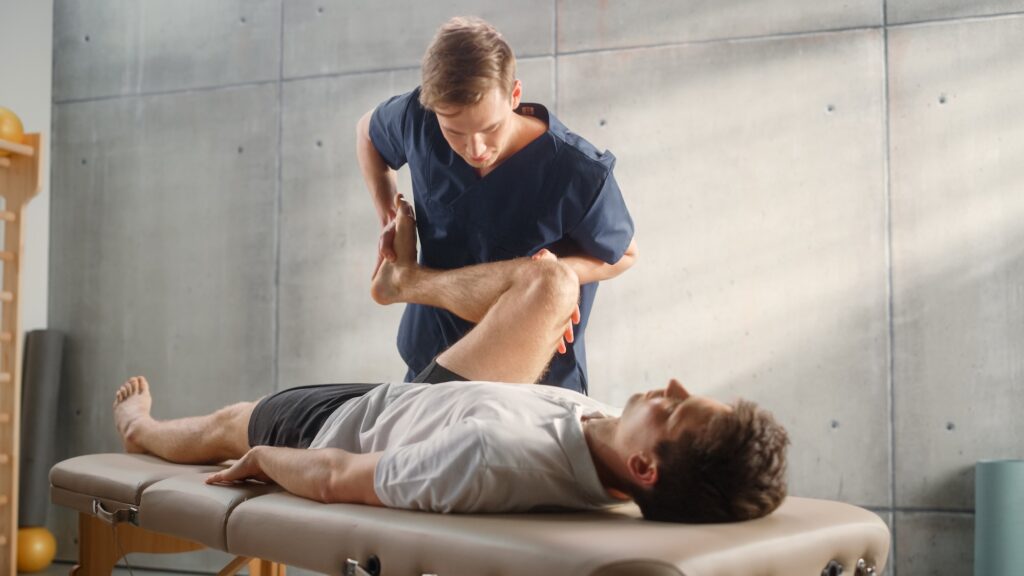
The GP runs a physical exam, finds nothing acute, and suggests rest plus paracetamol. The physio prescribes core exercises and stretches. The coach says to bowl through it and see how it settles. Each of them is doing their job competently. None of them is wrong, exactly. But none of them is looking at the actual question — which is what’s loading that bone in the first place.
Fast bowling generates ground reaction forces of eight to ten times bodyweight at front-foot contact. That force has to go somewhere. In a body with good hip rotation, good thoracic mobility, and well-developed posterior-chain control, it dissipates through the kinetic chain. In a body where the hips don’t rotate freely — common in adolescents who’ve grown four inches in eighteen months and haven’t caught up — that load goes straight to the spine.
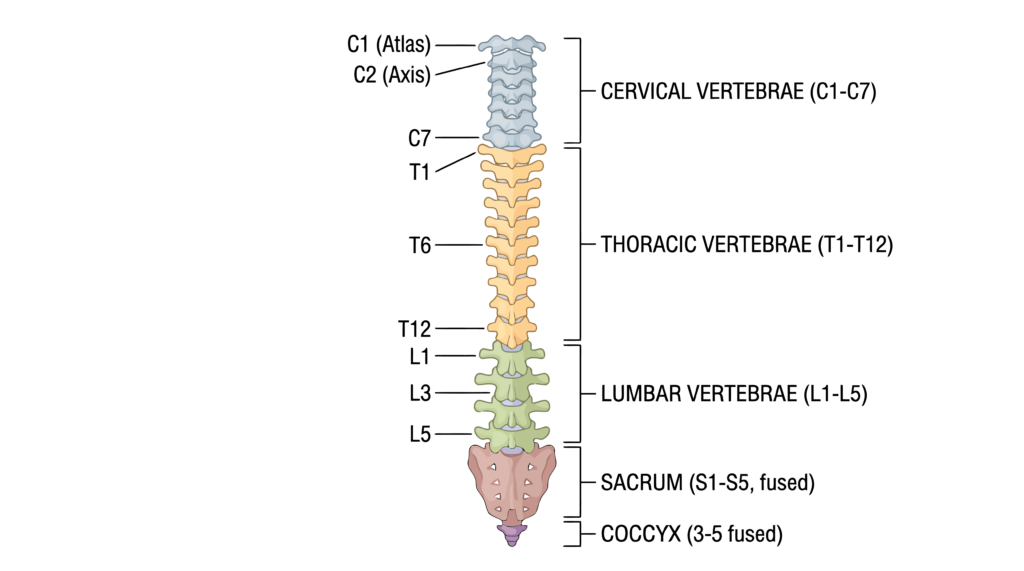
Specifically, it goes to the pars interarticularis. The bony bridge on each side of the lumbar vertebrae. The thing that, under repeated extension and rotation under high load, develops a stress reaction — and then, sometimes, a stress fracture.
That’s not growing pains. That’s a workload problem the body is signalling.
The GP, physio, and coach aren’t wrong about their pieces. They’re each looking at a piece. The screen is what looks at the whole.
The Research Tells Us Something Different
Across 350+ assessments at the clinic, the pattern in junior fast bowlers is consistent — and the research is well-mapped.
Engstrom and Walker’s 2007 MRI study of young fast bowlers tracked pars interarticularis stress in this exact population. Lumbar bone-stress injuries were markedly more common in junior fast bowlers than in age-matched non-bowlers. The lesions tracked the loading side of the action, almost always on the contralateral side to the bowling arm — the spine paying for what the bowling hip couldn’t manage.
Keylock and colleagues, in a 2022 cohort study published in Journal of Sports Sciences, confirmed the pattern in a longer-running sample: junior fast bowlers between thirteen and eighteen sit in a particularly vulnerable window. Their bones are still mineralising. Peak bone development for adolescents sits somewhere between thirteen and eighteen years of age. During that window, the bone is laying down structure — but it’s also more responsive to load, both for adaptation and for injury. Push too hard, too often, with a movement pattern that funnels load into the spine, and the bone tells you about it.
Two things follow.
First, the absence of pain doesn’t mean the absence of problem. Bone-stress injuries can develop silently for weeks before they become symptomatic. The first sign is often a mild, recurring ache after bowling that resolves with rest. Parents and coaches often dismiss this — because that’s exactly what growing pains feel like.
Second, the presence of pain that comes back, particularly pain that’s worse with extension or rotation, is the body asking for assessment. Not rest. Not stretching. Not “bowl through it” — assessment.
What kind of assessment? Specifically, a screen of how the hips, thoracic spine, and posterior chain are loading. If the hip on the back-foot side won’t rotate, the spine pays. If the thoracic spine won’t extend, the lumbar spine pays. If the posterior chain can’t decelerate the trunk through delivery, the spine pays.
Back pain in a young fast bowler is rarely growing pains.
A free parent’s guide — what’s actually likely happening, what to look for at home, and what to do about it.
We don’t treat the back. We screen the cause.
This is the assessment-led model. We don’t treat the back. We screen the cause.
Once you see the cause clearly, the path forward becomes specific. Not a routine. Not a template. A targeted intervention that meets the body where it actually is.
A Story From the Clinic

A clinic observation, from earlier this season.
A fifteen-year-old came in with his dad. Back pain for four months. The GP said growing pains. The physio gave him a routine of glute bridges and McKenzie press-ups. The coach said to keep bowling but reduce volume. The pain hadn’t gone away. It came back every time he tried to bowl at full pace.
We ran the screen. His hip internal rotation on his back foot was twenty-three degrees. The reference range for a fast bowler is fifty-plus. His thoracic extension was visibly limited. His single-leg posterior-chain control on the load side was, in his dad’s words, “a bit like a flamingo on ice”.
The screen tells you what the GP, physio, and coach can’t see — because they’re not looking at the bowling action, only at the back.
Six weeks of targeted hip mobility work and posterior-chain reconditioning later, he was bowling again, pain-free. The pain wasn’t a back problem. It was a hip problem the back was carrying.
That story is common. Not unique.
What to Do Instead
If you’ve read this far, you’re probably wondering what to actually do.
The honest answer is that I can’t tell you what’s happening with your child from a blog post. Every body is different. Every loading pattern is different. The point of this article isn’t to give you a routine — it’s to give you a different question to ask.
The question is: what’s loading the spine in the first place?
To answer that, you need a screen. Not a back examination. A bowling-action screen. Something that looks at hip rotation, thoracic mobility, posterior-chain control, and how those three things behave under the loads your child puts through them when bowling.
The Cricket Matters back-pain guide for parents of junior cricketers walks you through what this looks like. It explains the Home Screen — the things you can observe yourself, at home, before deciding whether to escalate. It explains what to look for, what counts as a red flag, when to come in for a full screen, and when to leave it alone.
It’s free. It’s PDF. It takes about twenty minutes to read.
If anything in this article has produced a question — about your child specifically, or about whether their back pain fits this pattern — the next move is a free twenty-minute clarity call. We talk, you describe what’s going on, I tell you what I’d want to look at.
The Next Move
What to do when your child’s back hurts.
Eleven conditions cricket can produce in a teenage spine. A seven-station home screen. A clear next step for every result.
Book a free twenty-minute clarity call.
You don’t have to decide what to do tonight. But you do now have the start of a different question to ask — about your child, the loading, and the bone that’s been telling you something.
That different question is the whole point.
FAQ
Is back pain in my junior cricketer always serious?
Not always — but worth taking seriously. Most junior cricketer back pain isn’t catastrophic. The worry sits in the small percentage that turns out to be a lumbar bone-stress injury, particularly in fast bowlers in the 11–17 window. The way to tell isn’t pain severity on day one — it’s pattern over time. Pain that recurs every time they bowl, pain worse with extension or rotation, pain lasting more than two weeks without easing — those patterns warrant a screen.
When should I take my child to the GP for back pain?
Sooner than most parents do — but not for the reason most parents think. The GP rules out serious red-flag pathology: fever with back pain, weight loss, neurological symptoms, night pain. For those, the GP is the right first call. What the GP often can’t do is assess how the body is loading the spine in the first place. If the pain is recurring after bowling, a movement screen runs alongside the GP visit — not instead of it.
What does a bowling-action screen actually look at?
Three things primarily — and how they behave together under load. First, hip rotation: the back foot needs to internally rotate freely (the reference range for a fast bowler sits above 50 degrees) so the spine doesn’t take the load. Second, thoracic mobility: the upper back needs to extend and rotate so the lumbar spine doesn’t compensate by twisting. Third, posterior-chain control: the body needs to decelerate the trunk through delivery. The output isn’t a diagnosis — it’s a map of where the chain is breaking, which tells us where the work needs to go.
How is junior back pain different from adult back pain?
The bone is the main difference. In adults, back pain is usually a soft-tissue or disc question. In juniors aged 11–17, the bone itself is still mineralising. The pars interarticularis — the small bony bridge in each lumbar vertebra — sits in a vulnerable window where it’s still building structure. Push too hard with a movement pattern that funnels load into the spine, and the bone can develop a stress reaction. That’s why “growing pains” is often the wrong framing — it’s the bone signalling load, not the body adapting to growth.